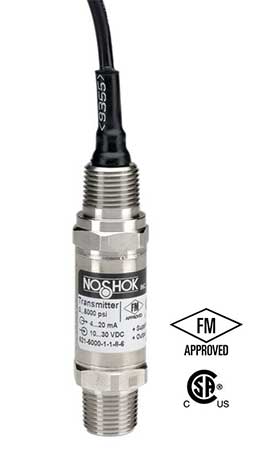
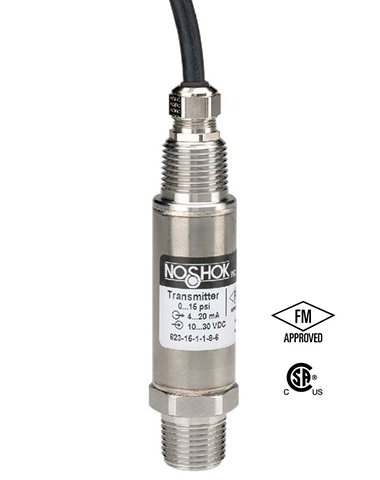
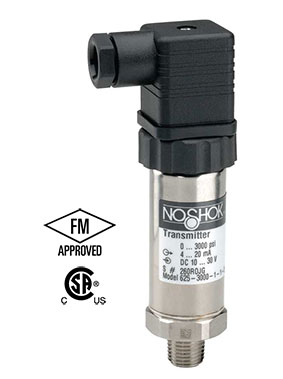
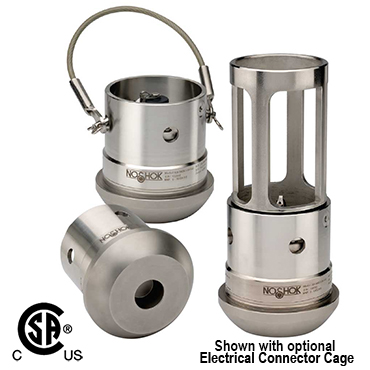
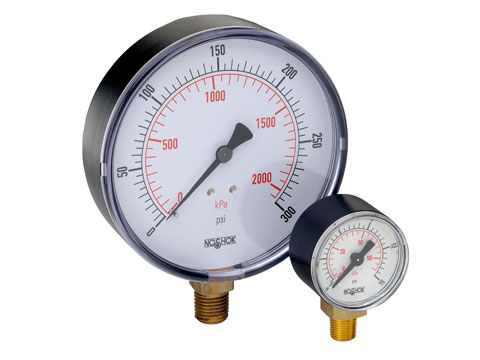
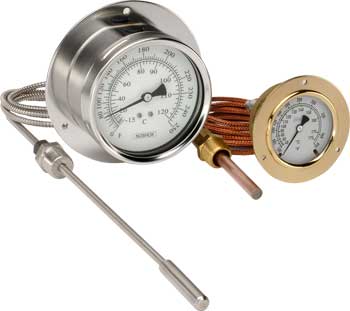
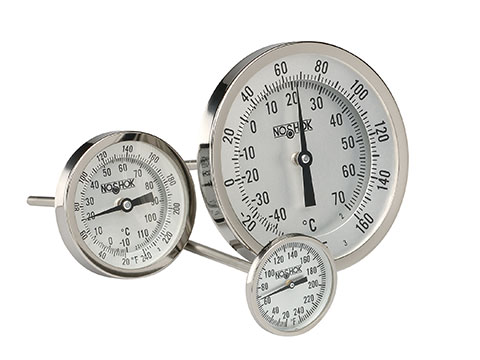
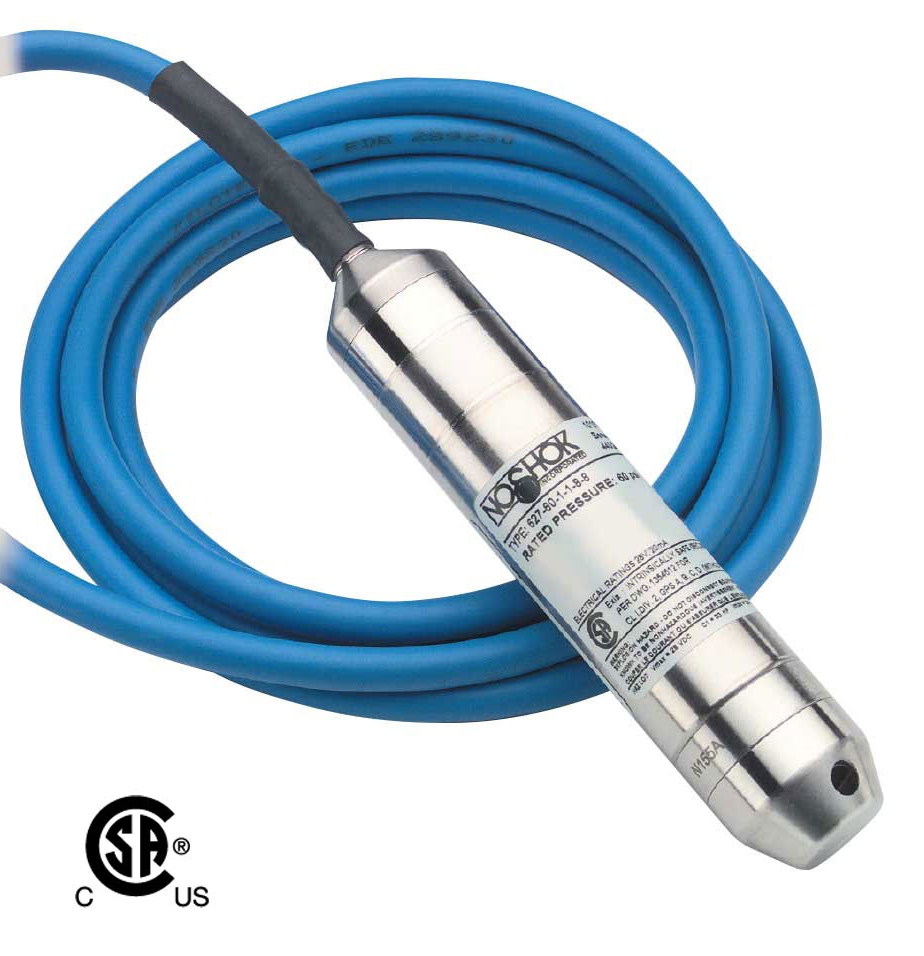
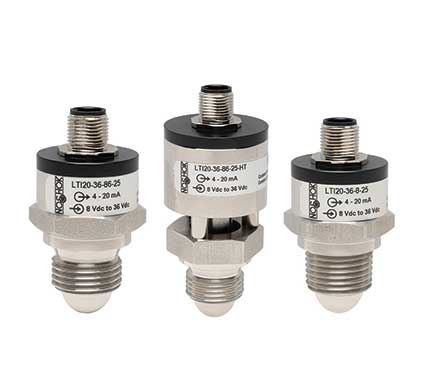
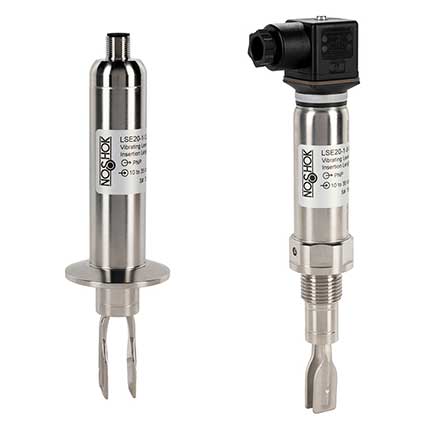
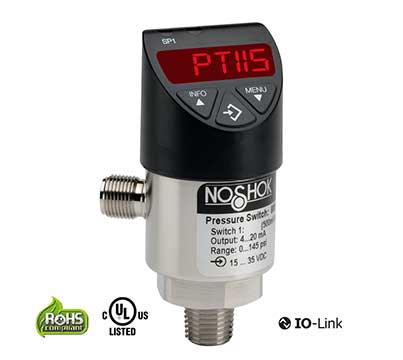
Use the PT Series Part Number Crossover Tool to convert from 100, 200, 300 and 615 Series transmitters to the new PT Series transmitters.
NOSHOK provides engineered Measurement Solutions for the oil and gas industry, from well service vehicles and upstream production to midstream gas compression, custody transfer, downstream chemical processing, refining, and offshore platforms. Our pressure, level, temperature, and valve products are built for harsh oilfield environments, delivering the accuracy, reliability, and safety compliance operators need to monitor critical points, protect high value assets, and maximize uptime.
Backed by decades of application experience and a comprehensive portfolio of hazardous location pressure transmitters, pressure gauges & switches, level instruments, and manifold valves, NOSHOK helps oil and gas producers, midstream operators, and refiners across North America and beyond improve process efficiency, reduce unplanned maintenance, and support safe, compliant operations.
NOSHOK Oil & Gas Solutions:
• Improve process efficiency
• Reduce unplanned maintenance
• Support safe, compliant operations
Download Literature and view official NOSHOK videos
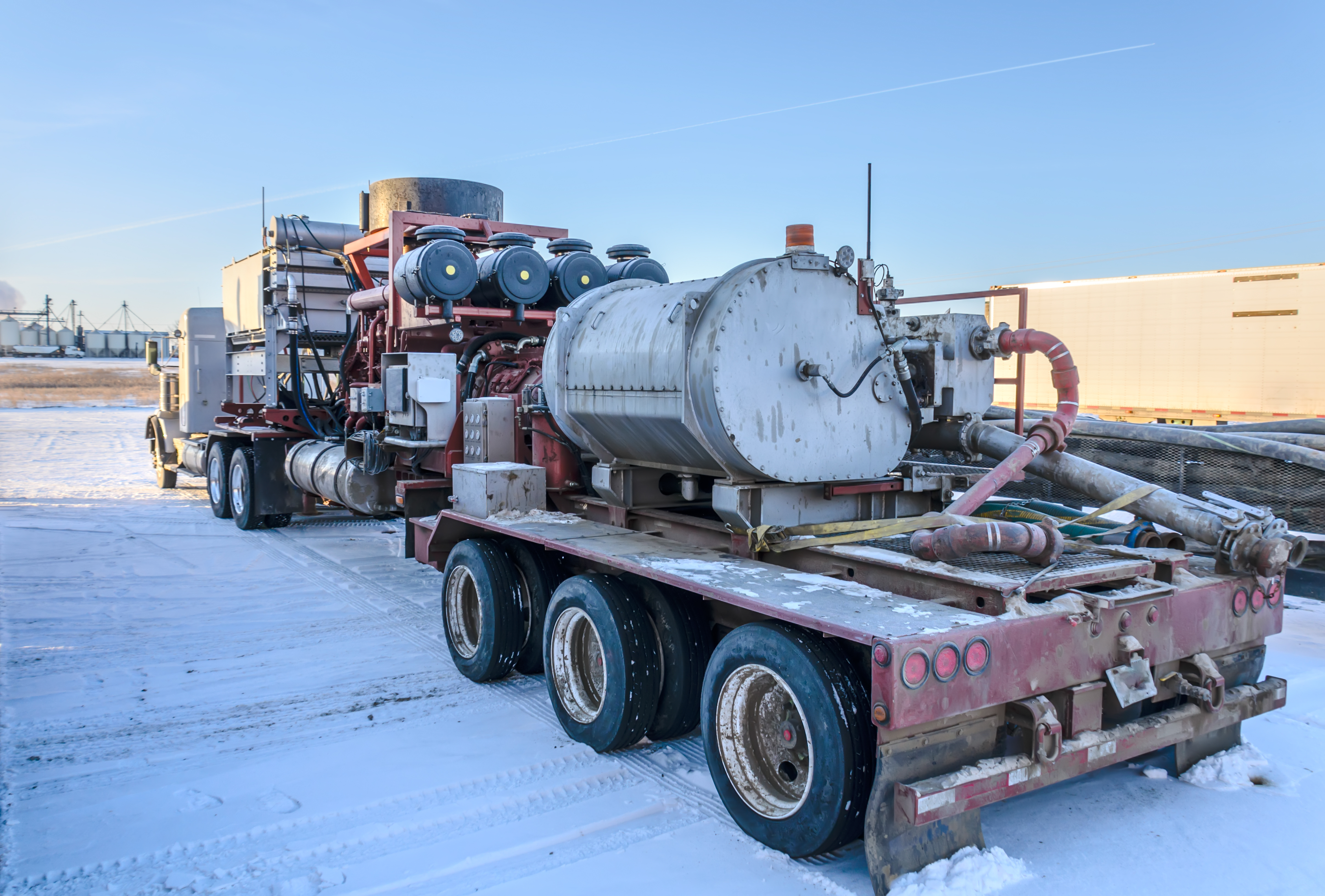
Instrumentation is critical to safe, reliable well completion service operations, giving crews real‑time visibility into high‑pressure systems during frac, blending, acidizing, cementing, and wireline work. Rugged pressure, level and temperature instruments with high‑ and low‑pressure alarms on pumps, distribution lines, tanks, and chemical injection circuits help maintain target treating pressures, protect equipment, and quickly alert unsafe conditions. By accurately monitoring critical points such as blender discharge, high‑pressure pump outlets, annulus returns, and additive tanks, well completion service vehicles can optimize frac jobs, cementing operations, and acidizing treatments while reducing non‑productive time and enhancing overall completion quality.
| Challenge | NOSHOK Solution | Purpose |
|---|---|---|
| Frac, blending, acidizing & cementing, wireline control panel monitoring | Provide engine oil, pump oil, hydraulic oil, transmission oil pressure, transmission lock‑up pressure, and temperature indication directly on well service control panels. | |
| Cementing, acidizing and injection operations | CSA‑approved Intrinsically Safe Hammer Union Pressure Transmitters (0‑5,000 to 0‑20,000 psig) |
Measure line pressure on high pressure, high viscosity media with Inconel wetted parts to handle acid service and other harsh well stimulation fluids. |
| High and low pressure alarms on pumps, distribution lines, tanks, etc. | Mechanical Pressure Switches, Electronic (IO‑Link) Pressure Switches, Temperature Switches |
Provides set points at critical monitoring points to monitor and control pressure or temperature |
| Critical monitoring points | General Purpose Fixed Range Pressure Transmitters, Hazardous Location Pressure Transmitters |
Deliver continuous, high accuracy pressure signals at critical monitoring points for closed loop control and real time visibility in completion operations. |
Servicing a producing oil well demands precise wellhead pressure monitoring, pump discharge monitoring, and reliable tank level monitoring on holding tanks and knockout drums to keep production safe, stable, and optimized. In this environment, accurate, durable pressure, flow, and level instrumentation is essential to protect the wellhead, tubing, artificial lift equipment, and surface transfer pumps, while maintaining proper retention time and surge capacity in upstream production tanks. By delivering dependable wellhead pressure transmitters, pump discharge pressure sensors, and continuous level monitoring solutions for crude oil tanks and knockout drums, we help operators prevent overfill and dry‑run conditions, maximize uptime, reduce unplanned maintenance, and sustain efficient oilfield production.
| Challenge | NOSHOK Solution | Purpose |
|---|---|---|
| Wellhead pressure monitoring on the producing wellhead | Class I Div I Explosion‑Proof Pressure Transmitters, Class I Div I Intrinsically Safe Pressure Transmitters |
Measure wellhead pressure and send a reliable signal to a remote device; wide range of pressure options with standard threaded or flush diaphragm process connections for versatility. |
| Wellhead local pressure indication for field verification | All Stainless Steel Dry & Liquid Filled Christmas Tree Pressure Gauges |
Provide rugged local pressure indication at the wellhead for quick visual verification in harsh oilfield environments. |
| Safe isolation of wellhead pressure instruments | Enable safe block and bleed service for pressure instruments during installation, calibration, and maintenance. | |
| Pump discharge pressure monitoring on surface production skids | Class I Div I Explosion‑Proof Pressure Transmitters, Class I Div I Intrinsically Safe Pressure Transmitters |
Accurately measure pump discharge pressure and transmit a continuous signal to the control system for monitoring and protection. |
| Durable local indication on pump discharge lines | All Stainless Steel Dry & Liquid Filled Pressure Gauges (2‑1/2″ and 4″ dial) |
Provide durable local indication of pump discharge pressure to support operations and troubleshooting. |
| Cost-effective gauge indication on pump skids | Stainless Case, Liquid Filled Pressure Gauges with Brass Internals (2‑1/2″ and 4″ dial) |
Offer cost effective local pressure indication on pump skids where stainless cases with brass wetted parts are suitable. |
| Isolation and venting of pump discharge instruments | Provide safe isolation and venting of pressure instruments on pump discharge lines. | |
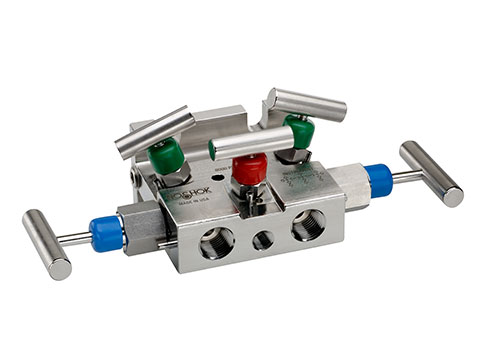
| Multiple-instrument mounting on a single pump pressure tap | Multiport Hard Seat Needle Valves, Multiport Soft Seat Needle Valves |
Three downstream female ports allow multiple instruments (gauges, transmitters, switches) to be installed on a single pressure tap. |
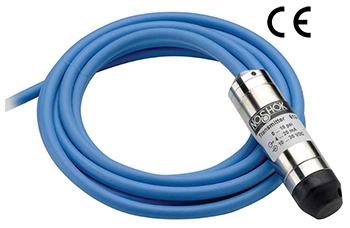
| Liquid level monitoring for holding tanks and knockout drums | Submersible Level Transmitters, Intrinsically Safe Submersible Liquid Level Transmitters, Low Pressure Explosion-Proof Pressure Transmitters, Intrinsically Safe Pressure Transmitters |
Provide cost effective and reliable tank level monitoring by measuring liquid head or low pressure and transmitting a level signal to the control device. |
| Vapor pressure monitoring in production tanks | Intrinsically Safe Pressure Transmitters (Class I, II, III Div. 1; Class II, III Div. 2; Class I Zone 0 approvals) |
Monitor vapor pressure in tanks and transmit a control signal to a remote device in hazardous vapor recovery applications. |
| Low-vapor-pressure indication for tank vapor recovery | Low Pressure Diaphragm Dry Pressure Gauges (2‑1/2″ and 4″ dial) |
Provide sensitive, local indication of low vapor pressures in tanks to support vapor recovery system monitoring. |
| High and low pressure alarms on pumps, distribution lines, tanks, etc. | Mechanical Pressure Switches, Electronic (IO‑Link) Pressure Switches, Temperature Switches |
Provides set points at critical monitoring points to monitor and control pressure or temperature |
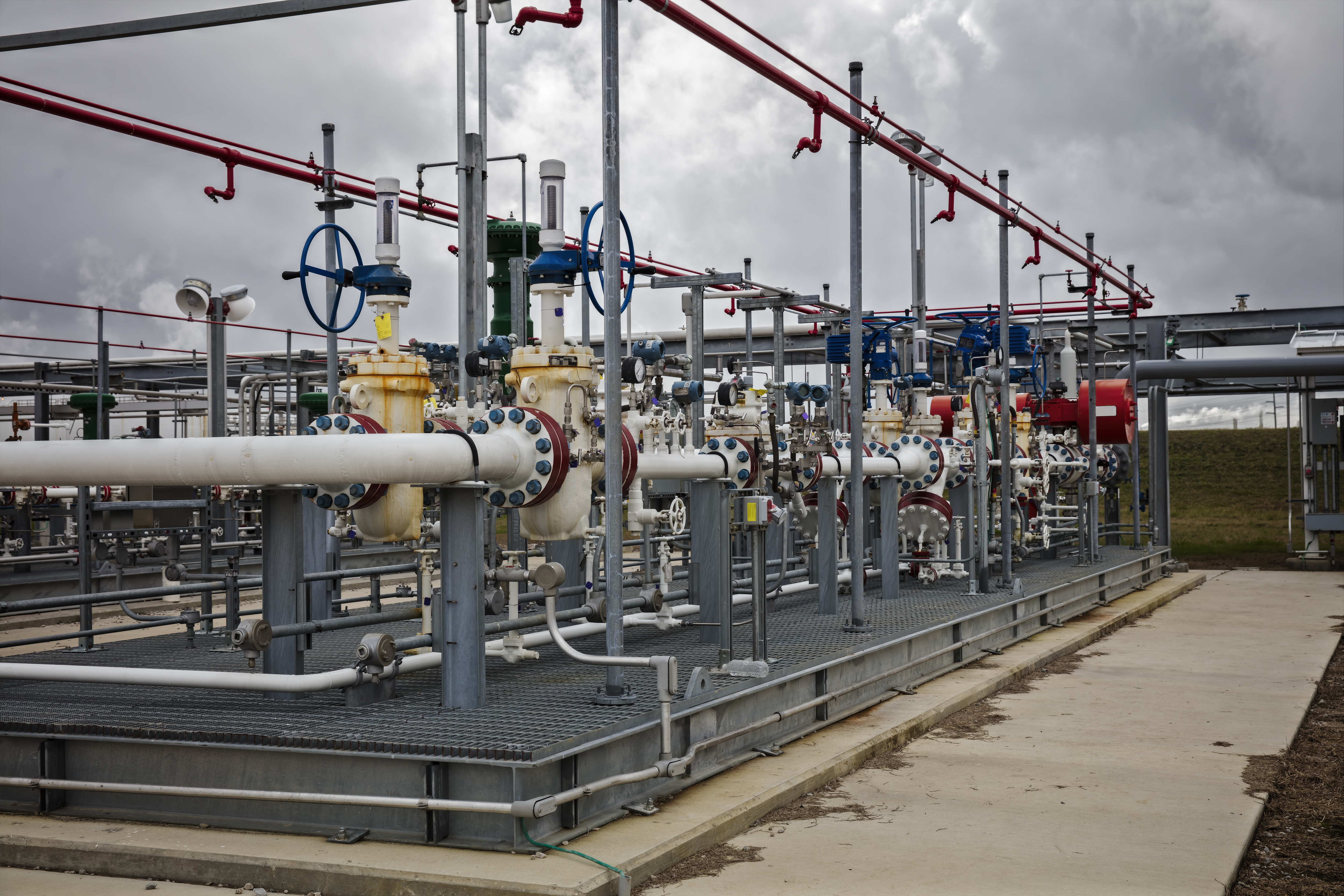
At natural gas processing plants and crude oil treatment facilities, the production fluid is routed through multi‑stage oil and gas separation systems, dehydration units, and stripping columns to remove associated gas, formation water, solids, and light hydrocarbons so that sales gas and stabilized crude meet pipeline and custody transfer specifications. These high‑efficiency gas‑oil separators, crude oil stabilizers, and NGL fractionation units rely on accurate, reliable instrumentation for level, pressure, flow, temperature, density, and oil‑water interface measurement to maintain phase separation, optimize chemical treatment, protect downstream equipment, and ensure safe, efficient operation of the entire oil and gas processing train.
| Challenge | NOSHOK Solution | Purpose |
|---|---|---|
| Pressure monitoring on separators and stripping vessels | Class I Div I Explosion‑Proof Pressure Transmitters, Class I Div I Intrinsically Safe Pressure Transmitters |
Measure process pressure in hazardous areas and send a reliable signal to remote control/monitoring devices. |
| Local pressure indication on process lines and vessels | Process Dry & Liquid Filled Pressure Gauges (4‑1/2” turret style, solid front) |
Provide local pressure indication with a safety case and blow out back for operator protection on process lines and vessels. |
| Reliable pressure indication in demanding separation service | All Stainless Steel Dry & Liquid Filled Pressure Gauges, ABS & Stainless Steel Liquid Filled Pressure Gauges |
Offer durable, liquid filled local pressure indication in demanding process environments. |
| Valve isolation for instrument maintenance in processing units | Enable safe block and bleed service for pressure instruments during maintenance and calibration. | |
| Differential pressure flow monitoring on process units | 3‑Valve and 5‑Valve Manifold Valves (traditional and coplanar mounts) |
Support differential pressure flow applications by allowing isolation, venting, and equalization of DP transmitters. |
| Local temperature indication on treatment lines and vessels | Provide direct local process temperature indication on lines and vessels. | |
| Remote temperature monitoring and control in gas plants | Convert resistance temperature measurements into signals for accurate, remote process temperature monitoring and control. | |
| High-temperature measurement in refining and treatment service | Measure high or variable process temperatures and transmit signals for monitoring and control in refining and processing units. | |
| Hazardous-location level measurement inside process tanks | Hazardous location approved device to measure head pressure inside tanks and send a safe level signal to the control system. | |
| Continuous tank level feedback in general-purpose service | Measure head pressure inside tanks in general purpose installations, providing continuous level feedback to control devices. | |
| Continuous non-contact tank level monitoring on vessels with foam or agitation | Externally mounted, non intrusive through air radar ideal for tanks with agitators, sediment, or foam, delivering continuous level measurement to the control system. | |
| Bottom-mounted level measurement on process tanks | Externally mounted at the bottom of the tank for accurate level measurement, transmitting a reliable level signal to the control device. | |
| Pressure and temperature alarm monitoring on treatment equipment | Mechanical Pressure Switches, Electronic (IO‑Link) Pressure Switches, Temperature Switches |
Provides set points at critical monitoring points to monitor and control pressure or temperature |
Injection skids for oil well enhancement are engineered systems that deliver precise chemical injection to maximize production, protect critical assets, and extend field life. These compact, skid-mounted packages integrate high-pressure metering pumps, filtration, control valves, and instrumentation to safely inject corrosion inhibitors, scale inhibitors, demulsifiers, surfactants and waterflood volumes directly at the wellhead or into the flowline. By maintaining reservoir pressure, preventing deposits, and safeguarding tubing, flowlines, and surface equipment, injection skids support reliable enhanced oil recovery, reduce unplanned downtime, and improve overall oilfield efficiency.
| Challenge | NOSHOK Solution | Purpose |
|---|---|---|
| Non-contact level measurement on skid-mounted chemical storage tanks | Compact, general purpose non intrusive device externally mounted to measure level via through air radar, allowing users to monitor tank level and send a signal to the control device. | |
| General-purpose tank level monitoring on the skid | Measures head pressure of liquid inside the skid mounted tank in general purpose installations, providing a level signal back to the control device. | |
| Hazardous-location tank level monitoring on the skid | Hazardous location approved submersible transmitter measuring head pressure inside the skid mounted tank, sending a safe level signal to the control device. | |
| Bottom-mounted level measurement for skid tanks | Externally mounted at the bottom of the skid mounted tank for accurate level measurement, transmitting a reliable level signal to the control device. | |
| Injection pump discharge pressure monitoring | Explosion-Proof Pressure Transmitters, Intrinsically Safe Pressure Transmitters, General Purpose Fixed Range Pressure Transmitters |
Accurately measure injection pump discharge pressure into the well and transmit a continuous pressure signal to the control device for monitoring and control. |
| Pressure and temperature alarm monitoring on injection skids | Mechanical Pressure Switches, Electronic (IO‑Link) Pressure Switches, Temperature Switches |
Provides set points at critical monitoring points to monitor and control pressure or temperature |
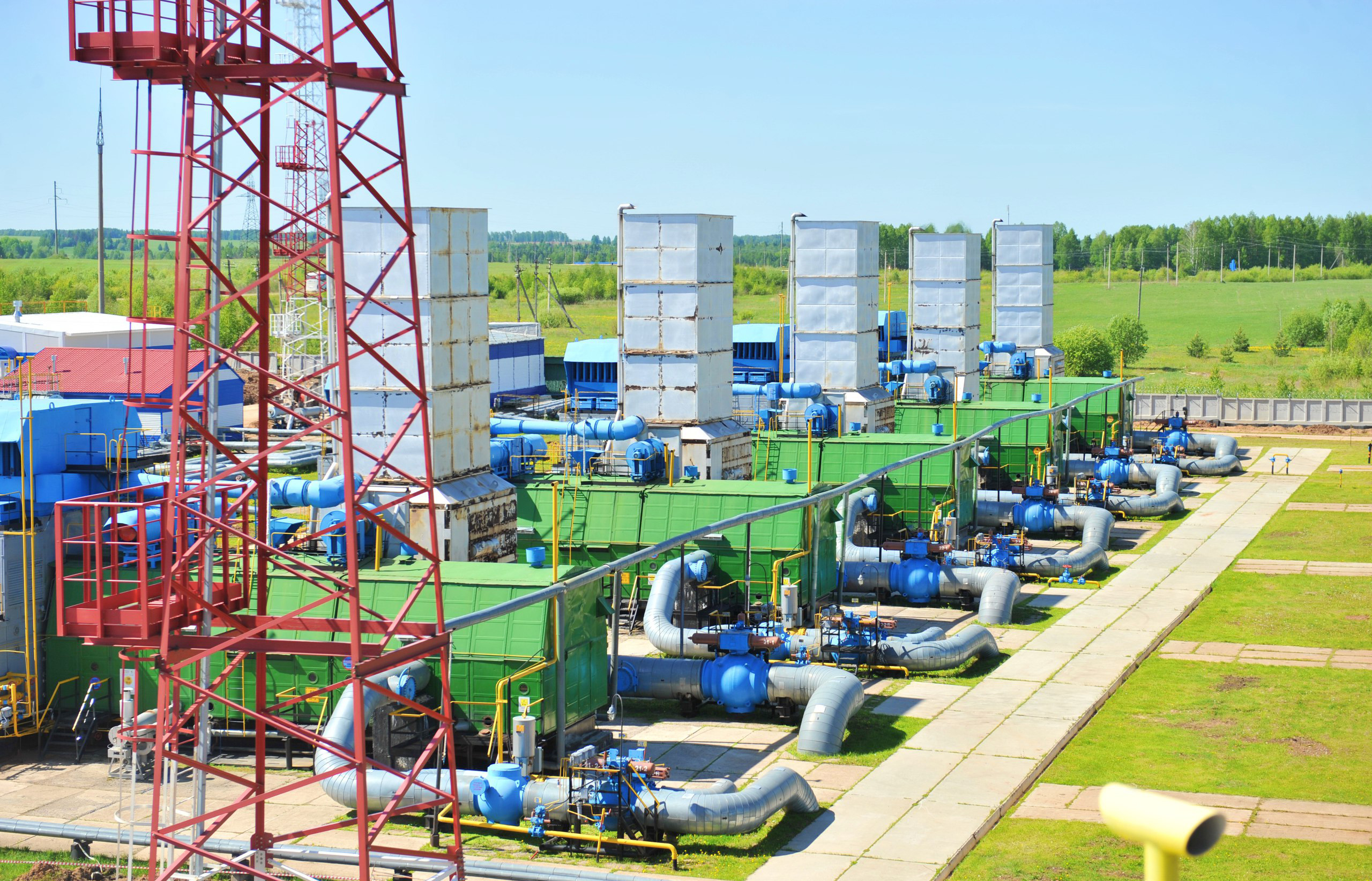
Gas compression stations are a critical part of the midstream pipeline network, maintaining and boosting gas pressure to keep product moving safely and efficiently over long distances. In these stations, compressors, suction and discharge headers, coolers, and separator vessels all depend on accurate, reliable instrumentation to monitor gas pressure, temperature, flow, and level in real time. NOSHOK instrumentation is engineered specifically for these demanding gas compression applications, helping operators control compressor suction and discharge pressure, protect high‑value rotating equipment, verify separator and filter performance, and sustain continuous, efficient natural gas transmission.
| Challenge | NOSHOK Solution | Purpose |
|---|---|---|
| High pressure gas lines and hazardous locations | Hazardous Location Pressure Transmitters - Explosion-Proof, Non-Incendive, Intrinsically Safe |
Ensure safe, compliant pressure monitoring in hazardous areas and critical midstream applications. |
| Local pressure indication on compressor skids and manifolds | Give technicians quick visual confirmation of operating pressure at key points. | |
| Temperature monitoring on discharge lines, coolers, and lube systems | Protect compressors from overheating and support performance and reliability optimization. | |
| Liquid level in suction scrubbers, separators, and condensate tanks | Submersible Level Transmitters, Intrinsically Safe Pressure Transmitters (used for level), Intrinsically Safe Submersible Liquid Level Transmitters, Continuous, Non-Contact Radar Level Transmitters |
Accurate and efficient level measurement of various tanks for safety and control. |
Custody transfer points in midstream oil and gas demand high‑accuracy, highly reliable measurement to protect revenue, ensure regulatory compliance, and maintain trust between buyers and sellers. In these applications, precise pressure, differential pressure, temperature, and level instrumentation on metering runs, prover loops, LACT units, and tank farms is critical to achieving accurate flow calculation and proving results. NOSHOK instrumentation solutions are engineered to support custody transfer and fiscal metering, by providing critical valves and manifold valves between the primary element (such as an orifice plate) and the flow computer/multi-variable transmitter.
| Challenge | NOSHOK Solution | Purpose |
|---|---|---|
| Static pressure monitoring on custody transfer metering runs | Hazardous Location Pressure Transmitters - Explosion-Proof, Non-Incendive, Intrinsically Safe |
Provide accurate static pressure measurement to the multi-variable transmitter or flow computer. |
| Controlling differential pressure, static pressure, block, bleed, and equalize between the primary element and the flow computer | Large bore 5-Valve Natural Gas Manifold Valves, Soft Seat/Tip (0.375” Orifice), Stabilized & Non-Stabilized Connectors, Stabilized Connectors With Integral Block Valve, Dielectric Kit |
Allow safe isolation, venting, and calibration of transmitters without disrupting measurement. |
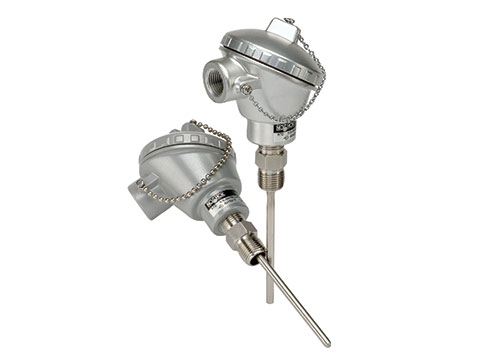
| Product temperature measurement at the meter run | Temperature Transmitters or RTDs with Thermowells |
Deliver accurate temperature input for volume correction and compliant custody transfer proving. |
| Local indication at metering skids and manifolds | Give technicians clear visual confirmation to support troubleshooting and verification. | |
| Efficient sampling of the process at flowing conditions | 316 Stainless Steel Heavy Wall Sample Probe (consult factory) with Optional Mini-Needle Valve |
Give technicians the ability to take process samples while the process is flowing. |
Downstream chemical processing and refining facilities depend on accurate, reliable instrumentation to keep critical processes safe, efficient, and compliant while maximizing uptime and throughput. In these harsh environments - refinery units, chemical reactors, steam loops, boilers, and balance‑of‑plant systems - high‑performance pressure, temperature, level, and flow measurement is essential for process control, emissions reduction, and equipment protection. NOSHOK Measurement Solutions are engineered for demanding downstream applications, providing robust, long‑term stable instruments that help operators optimize refinery operations and chemical plant performance across key industrial regions.
| Challenge | NOSHOK Solution | Purpose |
|---|---|---|
| Pressure measurement on less critical process applications such as pump discharge, steam headers, lube oil lines, and water applications | Fixed range Class I Div I 4-20 mA Output Explosion-Proof Pressure Transmitters |
Stable and accurate cost-effective pressure measurement solutions. |
| Critical process pressure monitoring such as reactors, distillation columns, and fuel distribution lines | Explosion-Proof Pressure Transmitters and Intrinsically Safe Pressure Transmitters for remote indication, |
Provide accurate, stable pressure data for process control, safety interlocks, and equipment protection in refining and chemical processing units. |
| Differential pressure measurement across filters, strainers, and heat exchangers | Differential Pressure Transmitters and/or Differential Pressure Gauges with Switch and Transmitter Options, with 2‑, 3‑, and 5‑valve Manifolds |
DP Transmitter: Monitor pressure drop across a primary element for flow measurement applications DP Gauge: Monitor pressure drop to optimize maintenance intervals and improve energy efficiency in filtration applications. |
| Effectively isolate the process from the instrument during maintenance intervals | Hard Seat Block & Bleed Needle Valves, Soft Seat Block & Bleed Needle Valves, Hard Seat Multiport Needle Valves, Soft Seat Multiport Needle Valves, and 2‑, 3‑, and 5‑Valve Manifold Valves |
Designed for critical applications, 100% helium leak tested, all 316 Stainless Steel valves meet the requirements of NACE MR0175/ISO 15156-3. |
| Temperature measurement in heaters, reactors, boilers, and steam systems | Temperature Transmitters, RTDs, Thermocouples (consult factory), Bimetal thermometers, Thermowells |
Deliver precise temperature input for process control, fuel efficiency, and protection of critical downstream assets. |
| Level monitoring in storage tanks, feed tanks, and separator drums | Submersible Level Transmitters, Intrinsically Safe Submersible Liquid Level Transmitters, Continous Non-Contact 60 GHz Radar Level Transmitter, Vibrating Level Switch (Tuning Fork) |
Ensure reliable level control for inventory management, overfill prevention, and pump dry run protection in refinery and chemical plant tanks. |
| Local indication in hazardous and general process areas | Provide clear, on site pressure and temperature indication to support instrument technician rounds and troubleshooting. | |
| Corrosive or high purity chemical service | Diaphragm Seals combined with Pressure Gauges or Pressure Transmitters |
Isolate instruments from aggressive or high purity media while maintaining accurate, repeatable measurement. |
| High and low pressure alarms on pumps, distribution lines, tanks, etc. | Mechanical Pressure Switches, Electronic (IO‑Link) Pressure Switches, Temperature Switches |
Provides set points at critical monitoring points to monitor and control pressure or temperature |
Equipment: Explosion-Proof, Non-Incendive, Intrinsically Safe Vapor Recovery & Intrinsically Safe Hammer Union Hazardous Location Transmitters
Application: Pressure measurement in Class I, Div I, and Class I Div II areas
Purpose: Remote measurement with a process signal to the control device
Equipment: Pressure Gauges, Vapor Actuated Remote Thermometers and Bimetal Thermometers
Application: Local pressure and temperature indication for process piping, tanks, vessels, equipment
Purpose: Provide clear, on‑site pressure and temperature indication to support instrument technician rounds and troubleshooting
Equipment: Block And Bleed, And Multiport Needle Valves And 2 , 3 , And 5 Valve Manifold Valves
Application: Designed for critical applications, 100% helium leak tested, all 316 Stainless Steel valves meet the requirements of NACE MR0175/ISO 15156-3
Purpose: Effectively isolate the process (block & bleed) from the instrument during maintenance intervals
Equipment: Temperature Transmitters, Transducers, RTDs, Thermowells
Application: Remote temperature measurement
Purpose: Process temperature measurement providing a signal to a control device
Equipment: Submersible Level Transmitters, Intrinsically Safe Submersible Liquid Level Transmitters, Radar Level Transmitters, Vibrating Level Switches
Application: Level monitoring in storage tanks, feed tanks, and separator drums
Purpose: Ensure reliable level control for inventory management, overfill prevention, and pump dry‑run protection in refinery and chemical plant tanks
Equipment: Pressure & Temperature Switches
Application: Critical monitoring of pressure and temperature
Purpose:
Provides set points at critical monitoring points to monitor and control pressure or temperature
Equipment: Non-Stabilized and Stabilized Connectors
Application: Mounted onto the orifice flange or the orifice fitting, connectors are sometimes referred to as a “Root Valve” or primary isolation valve
Purpose: Designed to reinforce the entire installation by shifting radial-stress load away from the NPT connections
Equipment: Direct Connect Assembly
Application: Provides an installation that keeps the meter close to the orifice taps for accurate flow measurements
Purpose: Reduces traditional remote mount installation costs by eliminating tube ends, tube fittings, stainless steel tubing, pipe stands and mounting brackets, decreases leak points by reducing NPT connections, minimizes or eliminates gauge line error
Equipment: Multiport for Indication, Output & Bleed
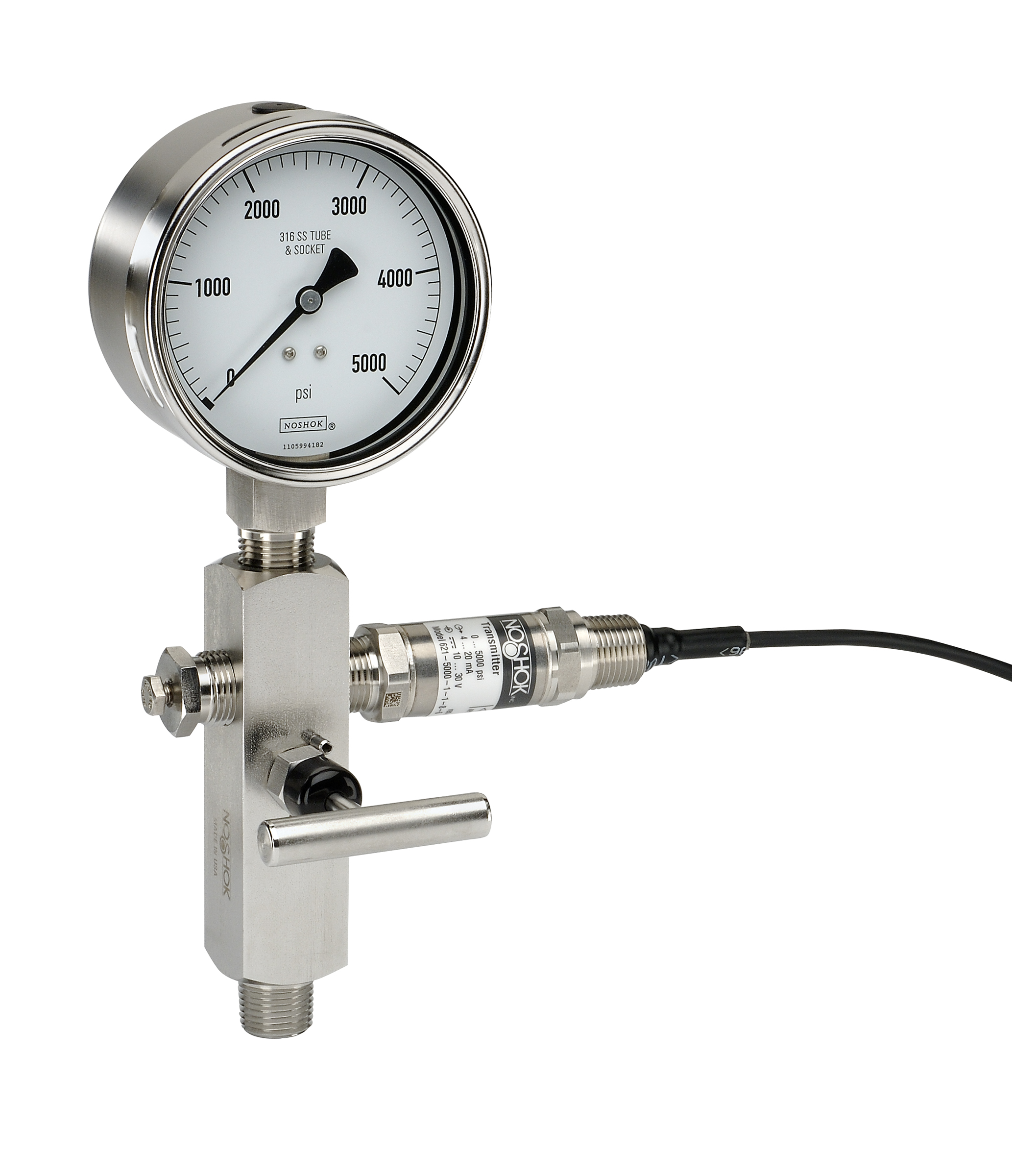
Application: Three components (Pressure Gauge, Pressure Transmitter and Bleed Plug) mounted to Multiport Needle Valve with one process connection to provide local indication, and analog or voltage output with block/bleed function
Purpose: Allows local indication and electronic output in one entry to the pipe
Equipment: Distribution Manifolds
Application: Connects multiple instruments to one diaphragm seal.
Purpose: Eliminates multiple connections that lead to possible leak paths
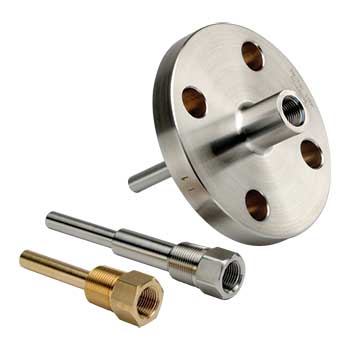
Equipment: Thermowells
Application: Allows a temperature instrument to be removed and replaced without shutting down and draining the process
Purpose: Reduces the possibility of damage to the temperature instrument. Provides protection to the operator
Equipment: Futbols
Application: Futbols (flange adapters) bolt to the process side of a flange-flange manifold to allow connection of process flange taps or process root valves. Futbols also allow flanges to be connected to threaded process piping while maintaining the ease of removal or repair of the manifold if maintenance is required.
Purpose: Converting a flange connection to an NPT connection
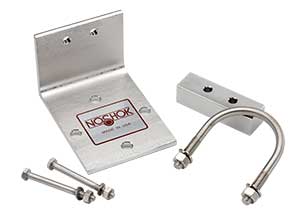
Equipment: Manifold Mounting Kits - 2-Valve & 3-Valve Manifolds
Application: The manifold mounting kit is designed for direct or remote mounting to a two-inch pipe stand
Purpose: This kit can be used with any NOSHOK 2-valve or 3-valve manifold by mounting a Steel or Stainless Steel bracket directly to the manifold body
Equipment: Vertical to Horizontal Adaptor Kits
Application: Adjust the orientation position of the instrument to better suit the application
Purpose: Converts vertically mounted Stabilized Connectors to a horizontal position for mounting additional valves and instrumentation
Equipment: Dielectric Kits
Application: Dielectric Kits provide a non-conductive barrier between the process piping and the instrument and isolates components from the effects of electrical current. By eliminating metal-to-metal contact, current is halted to prevent corrosion and aid in the cathodic protection of the system.
Purpose: Designed to maintain the integrity and reliability of the instrument installation and provide safety and corrosion protection
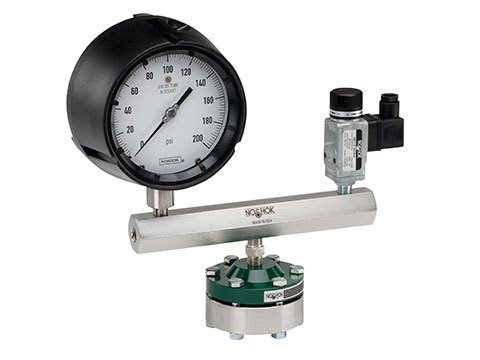
Equipment: Diaphragm Seals
Application: High temperatures, or corrosive or viscous process media.
Purpose: Keeps the process media away from the pressure instrument while still transmitting the pressure, so you get an accurate reading without the instrument touching the media.

WARNING:This product can expose you to chemicals including Lead and Nickel, which are known to the State of California to cause cancer and birth defects or other reproductive harm. For more information go to www.P65Warnings.ca.gov
A: Choose a transmitter with a maximum working pressure and overpressure rating above your worst case wellhead pressure, and ensure it meets applicable sour service/corrosion standards such as NACE MR0175/ISO 15156 for H₂S and CO₂. Materials for the wetted parts (e.g., duplex or super duplex stainless, Inconel) must be compatible with the produced fluids and any chloride content in formation water. Also confirm required approvals (e.g., explosion proof or intrinsically safe) for the hazardous area classification at the well site.
A: Use a diaphragm seal when the process fluid is highly viscous, dirty, contains solids, or is corrosive enough to plug or damage the instrument’s small pressure port, as is common with heavy crude, slop oil, and some produced water streams. The seal isolates the instrument from the process and uses a fill fluid to transmit pressure, reducing plugging and making cleaning or replacement easier. Diaphragm seals are also recommended when process temperatures are high and could exceed the instrument’s direct temperature rating.
A: Install snubbers, orifices, or throttling devices in the pressure connection to dampen rapid pressure spikes and pulsation created by reciprocating machinery. Remote mounting via impulse lines or tubing, using liquid filled gauges, and mechanically isolating the instrument from high vibration structures also help extend instrument life and improve reading stability. In severe cases, consider using electronic transmitters with internal damping and robust mounting brackets instead of direct mounted gauges.
A: For liquid service, it is customary to mount the transmitter below the pipe so impulse lines stay filled and avoid gas pockets, with both lines sloped continuously toward the transmitter. For gas service, it is customary to mount the transmitter above the pipe so any condensate drains back into the process line and the impulse lines remain mostly filled with gas. For steam, use condensate pots and proper elevation so both impulse lines maintain equal water columns, preventing density errors and protecting the transmitter from live steam.
A: Common causes include plugged or partially blocked impulse lines, gas/liquid separation issues such as foam and emulsions, vent or equalizing line blockages, and sensor drift or electrical noise. Start troubleshooting by verifying process conditions (foam/emulsion), checking and flushing impulse lines, and confirming all vents and drains are open as designed. Then validate the instrument’s zero and span against a known reference level, and inspect wiring, grounding, and terminations for moisture or corrosion.
A: Use a double block & bleed (DBB) manifold when you must positively isolate the instrument from the process and safely vent trapped pressure, typically on high pressure or high consequence hydrocarbon lines. DBB is common for differential pressure flow measurement, shutdown systems, and taps on pipelines and critical equipment where maintenance personnel require a verifiable zero pressure condition before working. A single block valve may be sufficient for less critical services where leakage risk and downstream consequences are low.
A: Select body and trim materials that meet sour service standards (e.g., NACE) and resist sulfide stress cracking and CO₂ corrosion, often involving low hardness carbon steel, stainless, or nickel alloys. For seals and packing, consider chemical compatibility and temperature: for example, PTFE or Grafoil for high temperature and aggressive fluids, and elastomers rated for H₂S and hydrocarbons rather than general purpose service. Offshore or high chloride environments may require higher grade stainless or duplex alloys to mitigate pitting and crevice corrosion.
A: Moisture ingress into cable glands or junction boxes, corrosion of terminations, electromagnetic interference from large rotating equipment, and inadequate shielding or grounding frequently cause signal problems offshore. Use properly rated cable glands and enclosures, maintain good cable shielding and single point grounding, and route instrument cables away from high voltage or high current power cables whenever possible. Regular inspections, proper terminations, and use of surge/lighting protection devices also improve long term signal reliability.
A: Calibration intervals depend on instrument type, criticality of the loop (e.g., safety shutdown vs indication), operating conditions, and historical stability data. Safety critical or custody transfer instruments are often calibrated more frequently (e.g., every 6–12 months), especially in harsh environments where temperature cycling, vibration, or corrosive atmospheres can accelerate drift. Many operators determine calibration intervals over time, depending on the agreement between buyer and seller in custody transfer contracts.
A: Typical documentation sets include instrument data sheets, P&IDs, instrument index, loop diagrams, I/O lists, wiring diagrams, and installation drawings, along with calibration certificates and factory test reports. For larger projects, you may also need cause and effect charts, safety integrity level (SIL) verification documents, meantime between failure reports, and hazardous area classification drawings tied to instrument certifications. These documents support design review, construction, commissioning, regulatory compliance, and long term maintenance.
A: Instrumentation in oil & gas projects usually needs hazardous location approvals such as FM and/or CSA for the appropriate Class/Division/Group, and in many regions ATEX or IECEx certifications for Zone classified areas are also expected or specified. In addition, projects commonly require NACE compliant wetted materials for sour service, along with documentation such as Certificates of Compliance and Certified Calibration—requirements that NOSHOK’s hazardous location pressure and level transmitters are specifically designed to meet.
A:
Hazardous locations are classified using a system that identifies the type of material present (Class), how often it’s present (Division), and its specific ignition characteristics (Group). Class I covers flammable gases and vapors, Class II covers combustible dusts, and Class III covers ignitable fibers; Division 1 means the hazard is present in normal operation, while Division 2 means it’s only present under abnormal conditions, with Groups (A–G) further defining the exact gas or dust family. For a clear, visual walkthrough of this system and how it applies to oil and gas pressure transmitters, see the NOSHOK hazardous location video.
A:
For suction protection, place a point level device just above the minimum safe liquid height and use a continuous transmitter to control normal start/stop levels. For transfer or filling applications, a high level switch near the top of the vessel provides a hard overfill limit that backs up the continuous level signal.
A:
In classified hazardous locations such as wellheads, digesters, or solvent storage, intrinsic safety ensures that the energy in the instrument circuit cannot ignite a flammable atmosphere. NOSHOK offers submersible and head-mounted transmitters that have approvals like FM and CSA to meet these requirements.
A:
Hydrostatic transmitters are ideal for continuous level measurement in wells, lift stations, and tanks where the media is relatively clean. Vibrating fork switches are excellent for high or low point-level protection and pump run-dry protection when you need simple binary level alarms. Radar level transmitters provide continuous, non-contact level measurement that excels in applications with varying dielectric properties, agitation, or where you want to avoid any wetted sensor in the tank.